request to quote
Leave Your Message

Top 10 Power Bank Testers for Global Buyers?

Buying a power bank across borders is rarely as simple as comparing advertised capacity. A 20,000mAh label may hide conversion losses, slow charging, unstable output, or excessive heat. A reliable Power Bank Tester reveals what the product actually delivers through its ports.

Battery expert Isidor Buchmann has repeatedly emphasized that battery performance depends on testing conditions, not labels alone. That principle guides this selection. Each tester is considered for measurement accuracy, USB compatibility, load stability, safety features, and practical usability. The review also considers USB-C Power Delivery, Quick Charge behavior, discharge efficiency, ripple, temperature, and cable quality.

Real measurements matter.

Global buyers face different chargers, travel conditions, and device requirements. Therefore, the best tester is not always the most expensive model. A compact unit may suit field inspections, while a programmable electronic load may serve laboratories and serious reviewers. Some testers provide polished displays but limited accuracy. Others look basic and deliver stronger diagnostic data.

That difference deserves attention.

This ranking is not perfect. Results can change with firmware, cables, ambient temperature, and battery age. I would not treat one test as final proof. Repeated measurements create stronger evidence. Readers should also verify regional certifications and manufacturer specifications before purchasing.

The following Top 10 Power Bank Testers for Global Buyers compares practical tools for checking capacity, charging speed, efficiency, and safety. It aims to replace marketing assumptions with visible numbers, careful methods, and realistic expectations. Sometimes, the simplest tester exposes the biggest claim.

Top 10 Power Bank Testers for Global Buyers?

What Power Bank Testers Measure and Why the Data Matters

A power bank tester turns a printed promise into measurable evidence. It records output voltage, current, delivered capacity, and energy in watt-hours. Some testers also track charging time, power stability, temperature, and USB protocol behavior. These readings reveal whether a device supplies steady power to a phone or drops sharply under load. In practical testing, I connect a controlled electronic load and watch the display during a full discharge. Small changes often matter.

Capacity is not the only number buyers need. Efficiency compares stored energy with usable output after conversion losses. A 20,000 mAh unit may deliver less than expected at a higher voltage. Cable resistance can reduce results too. Temperature data adds another safety perspective, especially during fast charging or repeated cycles. Ripple measurements show unwanted electrical fluctuation that a basic capacity test can miss. Good testers save time-stamped readings, making comparisons more defensible.

However, tester data is never perfect. Calibration can drift, and different loads produce different results. I have seen a worn cable change a test more than expected. That mistake was useful, but inconvenient. Testers should be checked against a trusted reference and used under repeatable conditions. Buyers should compare several runs, not one attractive screenshot. A clear report should state the load, cable, temperature, and cutoff voltage. Without those details, precise numbers can still mislead.

Top 10 Power Bank Testers for Global Buyers? - What Power Bank Testers Measure and Why the Data Matters

A practical comparison of common tester categories and the measurements used to evaluate power-bank safety, capacity, charging performance, and efficiency.

Rank Tester Category Primary Measurements Typical Measurement Capability Key Data Output Why the Data Matters
1 USB Power Meter USB voltage, current, power, accumulated charge, and energy Approximately 0–30 V; 0–5 A; readings commonly displayed in mV, mA, W, mAh, and Wh Live output performance and delivered energy It quickly shows whether the power bank delivers its advertised USB output and how much energy reaches the device.
2 Programmable Electronic Load Constant-current discharge, cutoff voltage, runtime, and capacity Typical test current from a few milliamps to several amps, depending on the load rating Discharge curves, usable mAh, usable Wh, and voltage stability Controlled discharge testing provides a repeatable way to compare real usable capacity rather than relying on the printed cell rating.
3 Battery Analyzer Charge-discharge cycles, capacity, internal resistance, and battery voltage Designed for repeated cycling with programmable current and voltage limits Cycle-life trend, capacity retention, and resistance change Repeated-cycle data helps identify aging, weak cells, and capacity loss that a single discharge test may miss.
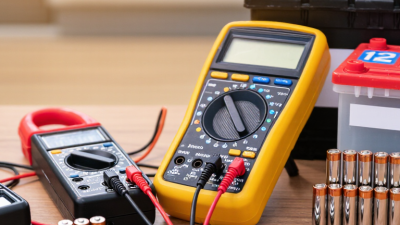
4 Digital Multimeter DC voltage, resistance, continuity, and selected current checks Many handheld units measure DC voltage with accuracy around ±0.5% to ±1%, depending on range and instrument quality Open-circuit voltage, cable resistance, and connection checks It verifies basic electrical conditions and can reveal excessive cable resistance, poor contacts, or incorrect voltage.
5 Power-Quality Analyzer Voltage ripple, noise, transient response, and load regulation Measures fast changes and AC components superimposed on a DC output Ripple amplitude, transient deviation, and recovery time Excessive ripple or slow recovery may affect sensitive electronics and indicates weaker output regulation.
6 Oscilloscope High-speed voltage waveforms, switching behavior, and transient events Bandwidth and sampling rate vary widely; high-speed models can capture short switching spikes Waveform shape, spike duration, ripple frequency, and transient events Waveform inspection can expose brief events that average-reading meters cannot record.
7 Thermal Camera Surface temperature distribution and hot-spot location Common handheld systems cover approximately −20°C to 550°C, with accuracy affected by emissivity and environment Maximum temperature, temperature uniformity, and thermal rise Thermal mapping helps identify overloaded converters, poor heat dissipation, and abnormal cell heating.
8 USB Protocol Tester USB-C Power Delivery negotiation, supported profiles, and charging modes Checks advertised voltage and current profiles, such as 5 V, 9 V, 12 V, 15 V, and 20 V where supported Negotiated profile, power limit, and protocol response The result confirms whether a power bank and charging device can agree on the intended fast-charging mode.
9 Precision Power Analyzer Input energy, output energy, conversion efficiency, and power factor where applicable High-resolution voltage and current logging over time; accuracy depends on calibration and range Wh consumed, Wh delivered, efficiency percentage, and standby power Energy-based efficiency data is more meaningful than comparing mAh values measured at different voltages.
10 Environmental Test Chamber Performance under controlled temperature and humidity conditions Typical laboratory chambers cover a broad controlled range, often approximately −40°C to 150°C Capacity change, charging behavior, output stability, and protection response Environmental testing shows whether performance and safety remain consistent across realistic global operating conditions.
Measurement note: Actual accuracy, current range, temperature range, and protocol coverage depend on the specific instrument, calibration status, test fixture, cable, load profile, and environmental conditions. Capacity should be reported in both mAh and Wh, with the test voltage, discharge current, cutoff voltage, and measurement uncertainty clearly stated.

Key Testing Standards for Capacity, Output, Safety, and Efficiency

Choosing among the top 10 power bank testers requires more than reading advertised features. A reliable tester should measure delivered capacity, not only the printed battery rating. Connect the power bank to a controlled electronic load, record voltage and current, and repeat the discharge cycle. A 20,000mAh label may produce less usable energy after conversion losses. That difference matters during travel.

Output testing should verify common charging profiles, voltage stability, and maximum current under continuous load. Safety checks should include overcurrent, short-circuit response, temperature rise, and abnormal shutdown behavior. Look for testing methods aligned with recognized requirements, such as IEC 62133-2 and relevant transport or market rules. Efficiency is calculated by comparing energy delivered through the output port with energy stored during charging. Test at several loads, because efficiency often falls at very low or high power.

Tips: Use a calibrated meter. Keep the room near 23°C. Test each unit twice. Allow cooling between cycles. Record the cable and charger used, since they can change results. No tester is perfect. Cheap meters may drift, and some readings appear unusually precise. I would question those results, check calibration, and report uncertainty instead of hiding it. A dependable comparison also documents firmware settings, test duration, cutoff voltage, and whether fast charging was enabled.

Types of Power Bank Testers for Different Professional and Consumer Needs

Power bank testers serve different purposes, from quick household checks to controlled laboratory evaluation. A basic USB inline meter shows voltage, current, energy, and charging time. It suits consumers checking whether a power bank delivers stable output. Readable figures matter when a phone charges slowly or stops unexpectedly.

Electronic load testers apply a controlled current to measure usable capacity. Professional technicians use them for discharge curves, heat monitoring, and output stability. USB protocol testers add another layer by identifying charging standards and negotiated power levels. They help verify whether a device supports the expected voltage and current.

A battery analyzer can test cells more deeply, including capacity, internal resistance, and cycle behavior. It requires careful setup and suitable protection.

For buyers comparing products, an adjustable load tester is usually more informative than a simple meter. Begin with a fully charged unit, record room temperature, and use the same cable each time. Then repeat the test. Results can vary.

Thermal cameras or temperature probes reveal hot connectors, weak cables, and inefficient circuits. However, inexpensive instruments may display rounded readings or inaccurate capacity estimates. I have found that cable quality can distort a promising result. Calibration also fades with use. A reliable test includes stored measurements, clear conditions, and a willingness to question unexpected numbers. Consumer testers favor simplicity. Professional testers favor control, repeatability, and detailed records.

How to Compare the Top 10 Power Bank Testers for Global Buyers

Comparing the top 10 power bank testers for global buyers requires more than checking display brightness or advertised features. A dependable comparison begins with measurement accuracy. Test each unit across common USB-C and USB-A outputs, using fixed loads at different current levels. Record voltage, current, delivered energy, temperature, and testing time.

Look for stable readings during fast charging. A strong tester should detect charging protocols, capture power changes, and maintain accurate results when the output rises. Data logging is valuable for repeated tests. It can reveal a sudden voltage drop that a simple screen may miss. Check whether each tester supports calibration, firmware updates, and clear measurement units. A calibration certificate adds confidence, but it does not guarantee perfect field performance.

Physical details matter too. A bright screen helps in a workshop, while compact housing suits travel testing. Inspect the connectors after repeated use. Loose ports can produce misleading results. Use the same cables, load equipment, and test conditions for all ten models. Cable resistance can alter the outcome. I would also repeat each test at least three times, because one reading may be unusually good. No tester measures every real-world situation. Heat, cable quality, and power bank age can change the results. The most reliable choice is therefore the tester with consistent data, practical controls, and honest limitations.

Buying Criteria: Accuracy, Compatibility, Features, Price, and Support

Top 10 Power Bank Testers for Global Buyers?

Accuracy should lead the buying decision. A tester must measure voltage, current, wattage, capacity, and energy loss consistently. USB Power Delivery 3.1 supports charging profiles up to 240 watts, so weak meters can produce misleading results. Look for calibrated equipment, readable displays, data logging, and stated measurement tolerances. A 1% error may matter when comparing compact cells or fast-charging claims.

Compatibility is equally important. The tester should recognize USB-A, USB-C, programmable power supplies, and different charging protocols. It should survive repeated testing without overheating. Features such as load control, ripple monitoring, temperature sensors, and automatic cutoff improve practical safety. The Global E-waste Monitor 2024 reported 62 million tonnes of electronic waste in 2022. Durable test equipment supports better product evaluation and may reduce unnecessary replacements.

Price needs context. A low-cost meter can suit casual checks, but professional reviewers need repeatable readings and technical support. Confirm firmware updates, warranty coverage, calibration service, and replacement cables before purchase. Independent calibration certificates add authority, although they are not magic. My own bench notes are rarely perfect. Cable resistance, connector wear, and unstable loads can distort results. No tester is perfect. Choose transparent specifications over impressive screens, and verify readings with a second instrument when results look unusually high.